When it comes to indoor cultivation, lighting is one of the most critical factors in plant performance. Growers are often tempted by flashy features, like adjustable spectrum LEDs, believing that having the ability to tweak light colors throughout a plant’s lifecycle will automatically boost yield and quality. While adjustable spectrum lighting sounds like the ultimate control, in reality, it often delivers minimal benefits compared to focusing on the core metrics that truly drive growth: PPFD and DLI.
At Bios Grow Lights, we work closely with commercial growers and horticulture experts to ensure lighting solutions are grounded in science, not hype. In this article, we’ll break down why adjustable spectrum is largely unnecessary, how to use PPFD and DLI effectively, and what you should prioritize to maximize your crops.
What Growers Really Need to Understand: PPFD and DLI
Before diving into the adjustable spectrum debate, it’s essential to understand the two metrics that matter most for plant growth.
PPFD Meaning and Importance
PPFD, or Photosynthetic Photon Flux Density, measures the number of photosynthetically active photons (light particles plants can use for photosynthesis) hitting a square meter every second. It’s expressed in µmol/m²/s.
Think of PPFD as the “intensity” of usable light for plants. Too low, and growth is slow. Too high, and you risk light stress, leaf burn, or wasted electricity. Proper PPFD management is far more impactful than swapping blue for red LEDs mid-cycle.
- For leafy greens: 150–300 µmol/m²/s works well for efficient growth.
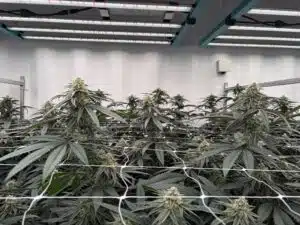
- For cannabis or flowering crops: 800-1,000 µmol/m²/s during the flowering stage maximizes yield without stressing the plants.
The takeaway? Ensuring your plants get the right PPFD at each growth stage is far more critical than spectrum adjustments.
DLI Explained
DLI, or Daily Light Integral, measures the total number of photons a plant receives per day, expressed in mol/m²/day. While PPFD tells you “how much light right now,” DLI tells you how much light your plants receive over the entire day.
DLI is particularly important for crops like cannabis and greens because it directly impacts photosynthesis efficiency, growth rates, and secondary metabolite production (like THC in cannabis or antioxidants in greens).
- Leafy greens: 12–18 mol/m²/day.
- Cannabis (flowering stage): 25–35 mol/m²/day.
When growers focus on hitting the target DLI consistently, plants flourish regardless of minor tweaks to the light spectrum.
For more information on PPFD vs. DLI check out our cheat sheet https://biosgrowlights.com/horticulture-blog/ppfd-vs-dli-explained-the-growers-lighting-cheat-sheet/
Why Adjustable Spectrum Often Isn’t Worth It
Adjustable spectrum lighting promises the ability to shift from blue-dominant light for vegetative growth to red-heavy light for flowering or fruiting. Sounds great, but in practice, it rarely justifies the cost. Here’s why:
1. Plants Are More Flexible Than You Think
Plants evolved under sunlight, which is a full spectrum of light. They naturally adjust to different light ratios. While red and blue wavelengths are important, most commercially available LEDs already provide an efficient spectrum that supports all growth stages. Minor tweaks often yield negligible improvements, or worse, limit growth and development potential.
- Consistency Beats Flexibility
Plants thrive under consistent, predictable light conditions. Switching spectra frequently can actually cause stress, especially if PPFD or DLI fluctuates unintentionally. Growers often see better outcomes by focusing on consistent PPFD delivery and maintaining target DLI levels.
3. Adjustable Spectrum Adds Complexity and Cost
Each additional spectrum adjustment feature comes with a higher upfront cost and more complicated control systems. For many commercial growers, the return on investment is marginal. In contrast, ensuring your current LEDs deliver stable PPFD across the canopy and throughout the day provides measurable gains without added complexity.
4. PPFD and DLI Are the True Growth Drivers
Ultimately, plant growth responds most to how much light they get, not the ability to toggle between shades of red and blue. A high-quality, single-spectrum LED that delivers optimal PPFD and DLI consistently will often outperform an adjustable-spectrum system that is improperly managed.
Practical Tips for Maximizing Growth Without Adjustable Spectrum
Here’s how you can achieve maximum yields and quality without chasing adjustable spectrum features:
1. Map Your PPFD Across the Canopy
Use a quantum sensor or light meter to measure PPFD at multiple points across your canopy. This will help you identify hot spots or shadowed areas and adjust light placement or height. Even distribution of PPFD ensures all plants receive the energy they need.
2. Calculate DLI for Each Crop
Combine PPFD readings with photoperiod length to calculate DLI. Use this formula:
DLI (mol/m²/day) = PPFD (µmol/m²/s) × 3600 × hours of light ÷ 1,000,000
Adjust light duration or intensity to hit your crop-specific DLI target. This is far more impactful than spectrum adjustments.
3. Prioritize Light Penetration
Canopy penetration matters as much as spectrum. High-intensity, well-distributed light that reaches lower leaves improves photosynthesis efficiency. Use reflective surfaces, optimal light spacing, or supplemental under-canopy lighting to boost overall light distribution.
4. Monitor and Adjust Gradually
Even with stable-spectrum LEDs, slight adjustments to PPFD or photoperiod can optimize growth. Track plant responses and fine-tune slowly. This approach is more predictable and reliable than toggling color spectrums.
Bios Grow Lights’ Expertise: Delivering What Matters
At BIOS, we design LEDs with optimized full-spectrum lighting that provide all essential wavelengths for photosynthesis from day one. Our lights are engineered for:
- Consistent PPFD delivery across your canopy
- Reliable DLI management for your crop type
- Energy-efficient performance with minimal heat output
Growers can focus on what truly matters: light quantity, duration, and distribution, rather than juggling unnecessary spectrum adjustments.
FAQs
Q: What is PPFD, and why does it matter for an indoor grow?
A: PPFD (Photosynthetic Photon Flux Density) measures the number of usable photons hitting a square meter per second. It’s crucial because it quantifies the light intensity plants can use for photosynthesis, directly affecting growth rates and yields.
Q: How is DLI calculated, and why is it important?
A: DLI (Daily Light Integral) measures total photons a plant receives per day. Calculated from PPFD and photoperiod, DLI helps ensure plants get enough light over 24 hours, which is vital for healthy growth and optimal crop production.
Q: What PPFD should I use for cannabis or greens?
A: For leafy greens, aim for 150–300 µmol/m²/s. Cannabis in flowering benefits from 800-1,000 µmol/m²/s. Always combine this with the correct photoperiod to hit your DLI target.
Q: Can I still benefit from adjustable spectrum lights?
A: In most commercial applications, the benefits are minimal compared to consistent, high-quality single-spectrum LEDs. Focus on hitting target PPFD and DLI first, this yields more measurable results.
Q: How do I know if my lights are delivering the right DLI?
A: Measure PPFD across your canopy with a quantum sensor and multiply by the daily light hours. Adjust intensity or duration to reach crop-specific DLI targets.
The Bottom Line
Adjustable spectrum sounds impressive, but it’s often more hype than substance. Growers achieve better results by prioritizing PPFD, DLI, and even light distribution rather than chasing minor color tweaks. Understanding and optimizing these metrics will maximize growth efficiency, yield, and quality, without unnecessary complexity or cost.
At BIOS, we provide lighting solutions engineered for consistent, science-backed performance. Our LEDs deliver the right spectrum, PPFD, and DLI for your crops, helping you grow smarter, not harder.
Ready to optimize your indoor grow setup? Contact our experts for a personalized consultation and see how the right light can transform your yields.